




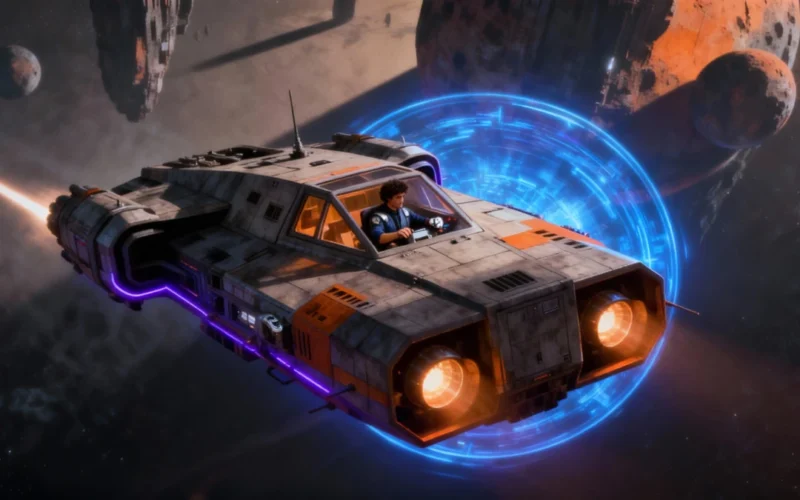
Just when you thought you’d seen every reboot under the twin suns of sci-fi, hold onto your captain’s chair—because nobody saw this coming. Peter Hoar, the director behind some of the most breathtaking episodes of The Last of Us, is boldly going where only the bravest nerds have gone before: resurrecting the British science-fiction legend, Blake’s 7.
Digging Up a Treasure (That Most of Us Missed)
If the name Blake’s 7 draws a blank, don’t sweat it. It’s basically the buried treasure of purebred science fiction fans, a cult classic hidden beneath decades of dust and piles of more glamorous franchises. But now, seeing the maestro behind the much-admired adaptation of Naughty Dog’s game setting his sights on this deep-cut gem? Well, the stakes just got cosmic.
To truly grasp why fans of a certain vintage are vibrating with anticipation (or nervousness), let’s paint the scene: It’s the late 1970s. Terry Nation—the very same genius who gave Doctor Who its dreaded Daleks—serves up a series that does a complete one-eighty from Star Trek’s signature optimism. Forget starry-eyed exploration; here, everything’s under the boot of a totalitarian Federation. It’s dystopia dialed up to eleven!
Bitter Rebels and Space Shenanigans
In the center of the storm stands Roj Blake. He’s the wrongly-accused resistance leader exiled to a prison planet (the universe does love an underdog story). On the way, he escapes with a ragtag bunch of criminals, steals a beefed-up spaceship called the Liberator, and becomes the pebble in the Empire’s shiny shoe. Political, cynical, packed with morally grey heroes and endings more bitter than burnt coffee—it was darker than Firefly, decades before Firefly, operating on a shoestring budget but with a heart too big for hyperspace.
Does this sound like something you’d binge in today’s age of gritty, character-driven dramas? Back then, it was a pioneer: a show where the lines between hero and villain were blurred, and hope was as rare as a functioning teleporter on the Liberator.
Why This Reboot Might Actually Work
You might be rolling your eyes—”Not another reboot?”—but hold the snark for a second. Remember what happened with Battlestar Galactica? The 2004 version, led by Ronald D. Moore, didn’t just update a campy old show; it obliterated expectations and became the gold standard for how to reboot: modernize the issues, dig deeper into characters, and use sci-fi to reflect the real world. That’s exactly the challenge Peter Hoar faces now.
- The sci-fi TV industry is bubbling with new attempts and resurrections—Stargate is coming back, and Star Trek’s latest film relaunches are multiplying faster than Tribbles.
- Every reboot is a gamble: When it’s good, it’s legendary; when it’s not, it’s…well, we’ve all been there.
But Peter Hoar isn’t just any director thrown at a franchise. The man bagged an Emmy Award for The Last of Us. He’s proven he can treat iconic material with reverence, while also crafting human drama that clenches your heart (and occasionally, your tear ducts). He films broken characters clawing for survival in worlds that would eat them alive for breakfast.
If that doesn’t feel like the DNA of Blake’s 7, I don’t know what does. Not just a blockbuster maker, but an artist with the chops to inject real depth into any universe, no matter how many lycra jumpsuits or questionable haircuts the source material offers. And he’s not just showing up with a script—he’s launching his own production company, Multitude Productions, to give the project his full commitment.
Hopes, Nightmares, and the Launch Pad
Yes, it’s a colossal challenge. Balancing the nostalgia of veteran fans with the curiosity (and higher standards) of a new audience? That’s the tightrope act of the century. But if anyone can turn this aging gem into a modern, relevant, and awe-inspiring series, it’s Hoar. We’ve gone from “oh no, not another reboot” to “please, just take our money already.”
The Liberator is prepped for takeoff again, and whether it burns through the stars or goes up in a spectacular fireball, you know where to find us: front row, popcorn in hand, ready to see if lightning can strike twice in the far reaches of the galaxy.
If your skepticism is louder than a Federation intercom, remember—sometimes the best sci-fi is the story nobody predicted, behind the helm of a storyteller nobody expected.